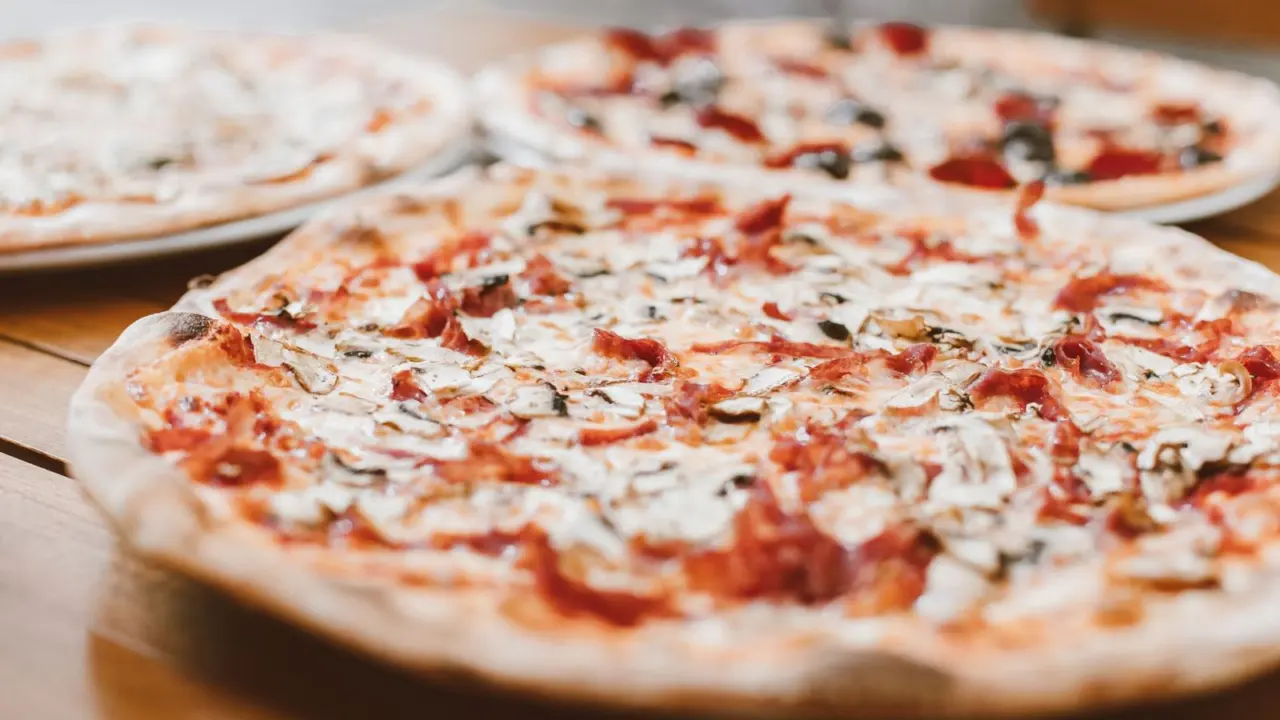
Searching for the best pizza in NYC can feel impossible when every corner you pass has a slice. Here’s the answer: look for a crisp yet pliable crust, balanced cheese and sauce, and a hot, consistent bake.
This guide is part of the wider look at new york restaurants.
| Item | Value |
|---|---|
| Lombardi’s pizza sales begin (Eater NY account) | 1905, at a nickel per pie |
| Original coal-oven pie diameter | 14 to 16 inches |
| Coal oven temperature | 800 to 1,000°F |
| Gas oven temperature range | 500 to 550°F |
| Slices from an 18-inch New York pie | Eight |
| First gas-fired pizza oven | 1934 |
The figures come from Eater NY’s 2015 guide to pizza styles and from Ed Levine’s slice history, republished by Yahoo Lifestyle in 2018. Historical dates are often disputed and can change, so check the source before you rely on them.
What makes a New York slice good
Start with what the slice is for. Eater NY’s August 2015 guide says the New York style is virtually defined by a low cost of entry, immediacy of service and portability.
That formula covers a huge range. Tasting Table noted in July 2022 that the metro area had nearly 1700 pizza locations, from street stands selling $1 slices to a $2,000 gold-topped pie. One ranking rarely settles an argument across that spread.
Pizza historian Scott Wiener, quoted by Fine Dining Lovers in December 2024, judges the quintessential slice on consistency, reliability and speed. His example is Joe’s Pizza, which opened in 1975. He sums up the process as “tomatoes, mozzarella, oven, and done.”
The same Eater NY guide describes the traits of a gas-oven slice. Use them as a checklist:
- The cheese covers the whole pie, with sauce only poking out along the edge.
- Low-moisture mozzarella is used, not fresh, because fresh suits the gas oven poorly.
- The crust has crunch and snap, alongside the pliancy and springiness of the dough.
- The slice reheats well, a trait of gas-oven baking that the next section explains.
Coal ovens and gas ovens: why the slice looks the way it does
At the start of the 20th century, pizza in New York was cooked in massive coal-fired masonry ovens originally built to bake bread, according to Ed Levine’s history on Yahoo Lifestyle. Those ovens reached 800 to 1,000°F. Whole pies were the norm because coal-oven pizza is best eaten quickly, since it tends to get tough and chewy once it cools.
The slice came from a different oven. By 1934, salesman Frank Mastro had invented the first gas-fired pizza oven and persuaded the Blodgett oven company to make them, per the same history. Maximum heat dropped by 400°F to a range of 500 to 550°F, so pies baked drier and could be reheated.
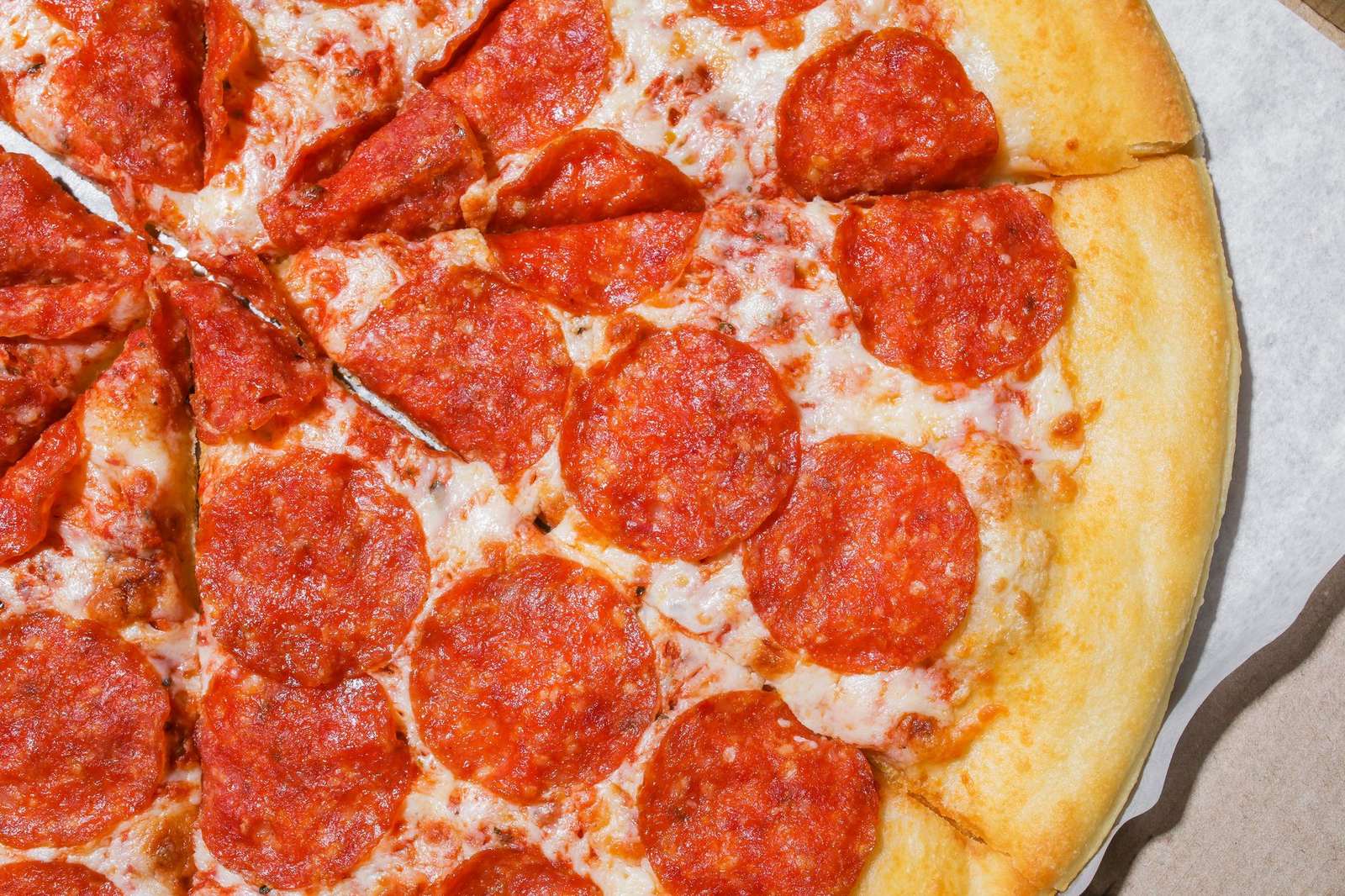
Gas ovens also lowered the cost of opening a shop. Eater NY’s 2015 guide ties them to a democratization of the pizzeria through lower costs. It adds that a typical 18-inch New York pie yields eight slices.
The styles you will meet around the city
Pizzerias rarely stick to one format, so it helps to know the names. These are the main styles in Eater NY’s August 2015 guide:
- Neapolitan-American: a thin crust, a judicious covering of tomato sauce and a smattering of fresh mozzarella. The original pies averaged 14 to 16 inches and were cooked in coal ovens.
- New York style: baked in gas ovens and sold as whole pies or by the slice, with far more cheese than the coal-oven type.
- Square pies: pan-cooked Sicilian and grandma pies, with a crust generally over an inch thick.
- Coal oven Neapolitan: a blend of the Neapolitan and Neapolitan-American styles, associated with Luzzo’s in the East Village, which opened in 2005.
The coal-oven story has a regulatory twist. As of Eater NY’s August 2015 guide, a grandfathered space was the only way to use a coal oven within city limits. That is why Patsy Grimaldi, who wanted to open in Manhattan, opened Grimaldi’s in Brooklyn in 1990.
Classic slice shops and the history behind them
The usual origin story credits Lombardi’s. Eater NY says Gennaro Lombardi began selling pizza from his Spring Street grocery in 1905 for a nickel per pie, and Ed Levine’s history notes that Lombardi’s claims 1905 as its founding date.
Not everyone accepts that story. Tasting Table, in July 2022, cited research that Filippo Milone, a pizza maker from Naples, established six pizzerias in the city before Lombardi arrived in the U.S. Treat any “first” claim with caution.
Several early shops trace back to Lombardi’s, according to the Yahoo history:
- Totonno’s and John’s were both opened by Lombardi’s alumni, in 1924 and 1929 respectively.
- Louie and Ernie’s opened in Harlem in 1947 before moving to the Bronx in 1959.
- Joe’s Pizza in Greenwich Village opened in 1975, per Fine Dining Lovers.
For a neighborhood-by-neighborhood trip, Eater NY also names Joe & Pat’s on Staten Island, Rose & Joe’s in Queens and Sal & Carmine’s on the Upper West Side as worth a trip. These are examples, not a ranking. If pizza is one stop among many, read about the best restaurants in new york city for sit-down options.
The new wave: long ferments and creative toppings
A newer group of slice makers is changing the formula, Fine Dining Lovers reported in December 2024. Long fermentation is the common thread:
- L’Industrie uses a 72-hour, cold-fermented dough for a wafer-thin crust, and sells an estimated 2,500 burrata slices weekly across its Williamsburg and West Village shops.
- Paulie Gee’s Slice Shop opened in 2018 and uses a 48-hour fermentation. Its signature Hellboy is pepperoni finished with chili-infused honey.
- Brooklyn DOP builds round, Sicilian and grandma pies on a 96-hour fermented dough.
These shops answer a different craving than the classics. The old school wins on simplicity and speed, while the new wave leans on process and toppings. Both belong in a fair search.
How do you judge a slice yourself?
You do not need a guidebook to build your own shortlist. Run each shop through the same steps so the comparison stays fair:
- Order a plain cheese slice first. Wiener says the appeal of a classic shop is that “there’s not a lot of options. It’s simple.”
- Look at the cheese. It should cover the pie, with sauce showing only at the edge.
- Listen for the crunch and snap, then check that the dough still bends and springs back.
- Return on another day. Consistency is one of Wiener’s stated criteria.
- Compare like with like: a square slice and a gas-oven round slice are different dishes.
Once the slice question is settled, the best bagels in nyc make a natural next hunt.
Frequently asked questions
Is there one best pizza in NYC?
Show answer
The sources do not point to a single winner. They describe several styles, and Wiener’s criteria are consistency, reliability and speed, as Fine Dining Lovers reported in December 2024.
Why can a New York slice be reheated?
Show answer
Gas ovens run cooler than coal ovens, so pies bake drier and keep longer. The Yahoo history says the max oven temperature drops by 400°F, and that the drier pies are reheatable.
What is the difference between Sicilian and grandma pizza?
Show answer
Per Eater NY’s August 2015 guide, the difference is mainly proofing. Sicilian dough is proofed until it becomes noticeably airy, while grandma dough has a shorter proofing phase.
Can you still use a coal oven in New York City?
Show answer
As of Eater NY’s August 2015 guide, only a grandfathered space allowed it within city limits. Rules can change, so check current regulations. The details are in Eater’s guide.