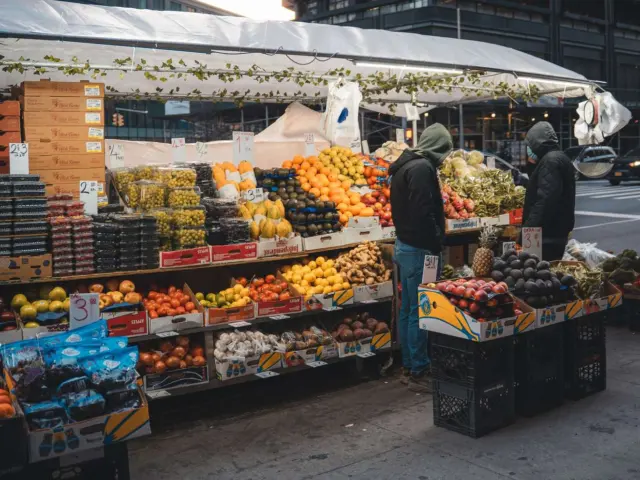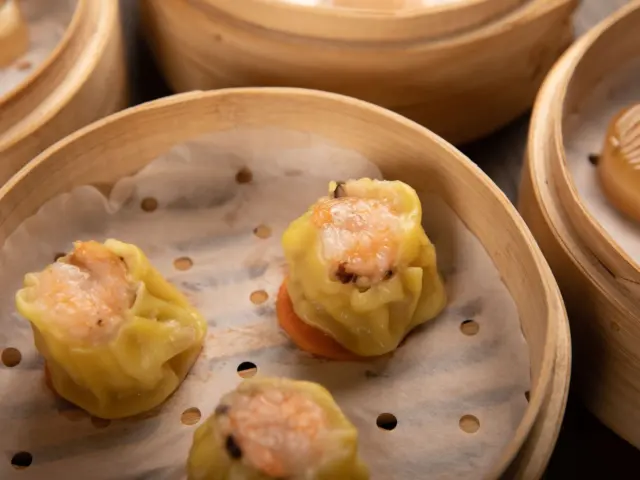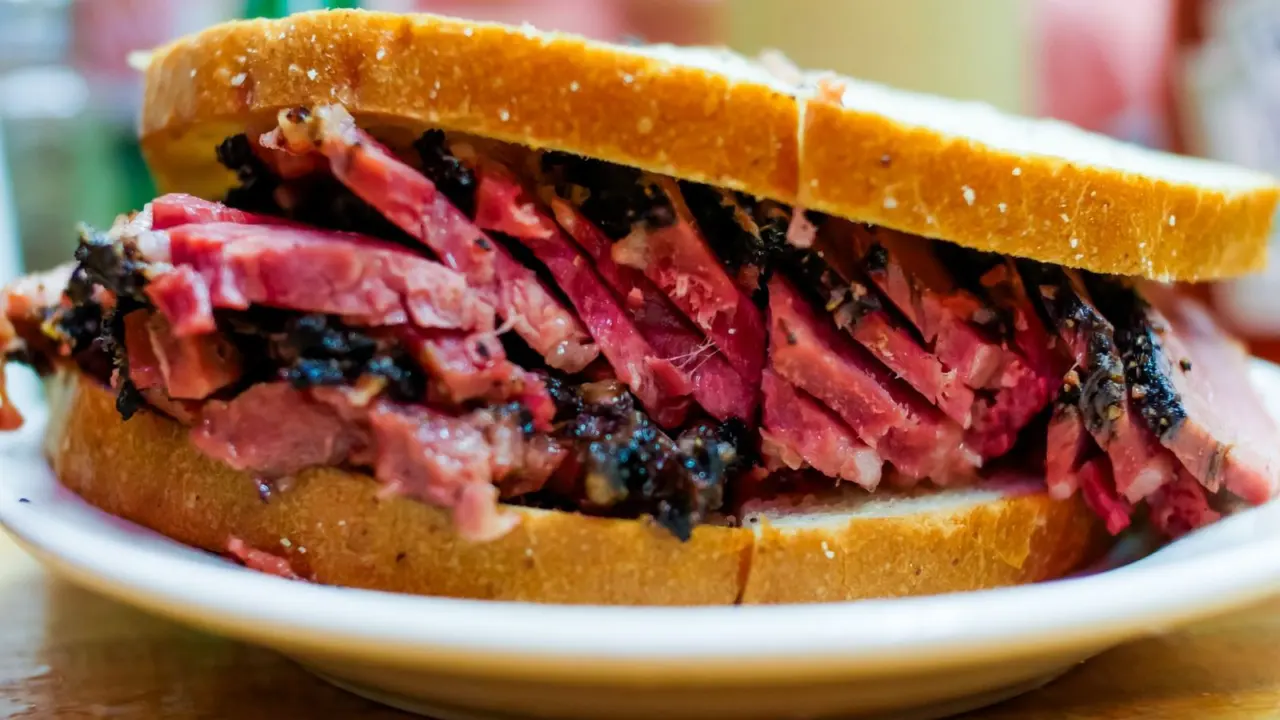
Planning a trip and wondering what to eat first? The classic New York foods are pizza, bagels, pastrami on rye, cheesecake and General Tso’s chicken. Start there, then branch out.
This page is part of our new york food guide, which looks at eating across the city.
| Item | Date or detail |
|---|---|
| First US pastrami sandwich, credited to Sussman Volk | 1887 |
| Katz’s Delicatessen, founding date | 1888 |
| Lombardi’s, said to be licensed to sell pizza | 1905 (a claim later research has challenged) |
| Cream cheese invented in Chester, New York | 1872 |
| T.T. Wang’s sweetened General Tso’s chicken at Shun Lee Palace | 1972 |
Dates in the table come from Table Journey’s signature dishes guide and NYCtourism.com. Food origin stories get revised and disputed, so check the source before you rely on them.
Pizza and bagels: the everyday icons
These are the foods New Yorkers eat standing up, and they are the easiest place to begin. Both have a clear immigrant backstory and a fairly clear idea of what “right” tastes like.
The New York slice
Pizza reached the city with Italian immigrants. According to NYCtourism.com, Neapolitan-immigrant bakers in the late 1800s adapted their pies to coal ovens, which gave a crisper result that later grew larger to suit by-the-slice sales.
A good plain slice balances crust, sauce and cheese so that no one element dominates. The crust should be crisp yet flexible enough to fold lengthwise, and most New Yorkers will accept no more than two toppings. The same page lists Joe’s Pizza and NY Pizza Suprema among the places to try one.
You will also hear that Lombardi’s was the first pizzeria. Table Journey says the shop is said to have been licensed to sell pizza in 1905, but notes that later research has challenged that first pizzeria claim.
The bagel
A New York bagel is boiled and then baked, which gives it a shiny finish and a chewy bite. It is generally lightly sweetened with malt or honey, and some fanatics insist you can only make one with the city’s water, as NYCtourism.com reports.
The classic order is lox, cream cheese, capers, tomato and red onion. Table Journey says that combination became a New York brunch around 1900, and that many New Yorkers still hold a fresh bagel should never be toasted.
NYCtourism.com names Bagel Hole, Murray’s Bagels, Russ & Daughters and Tal Bagels as places to find one.
Deli classics: pastrami, corned beef and the Reuben
The Jewish deli gave the city its most famous sandwich. NYCtourism.com says Jewish immigrants from Romania brought pastrami to New York in the second half of the 19th century.
Table Journey says Sussman Volk, a kosher butcher, served the first US pastrami sandwich in New York in 1887, according to his daughter. Katz’s Delicatessen on the Lower East Side dates its founding to 1888 and serves about 15,000 pounds of pastrami a week.
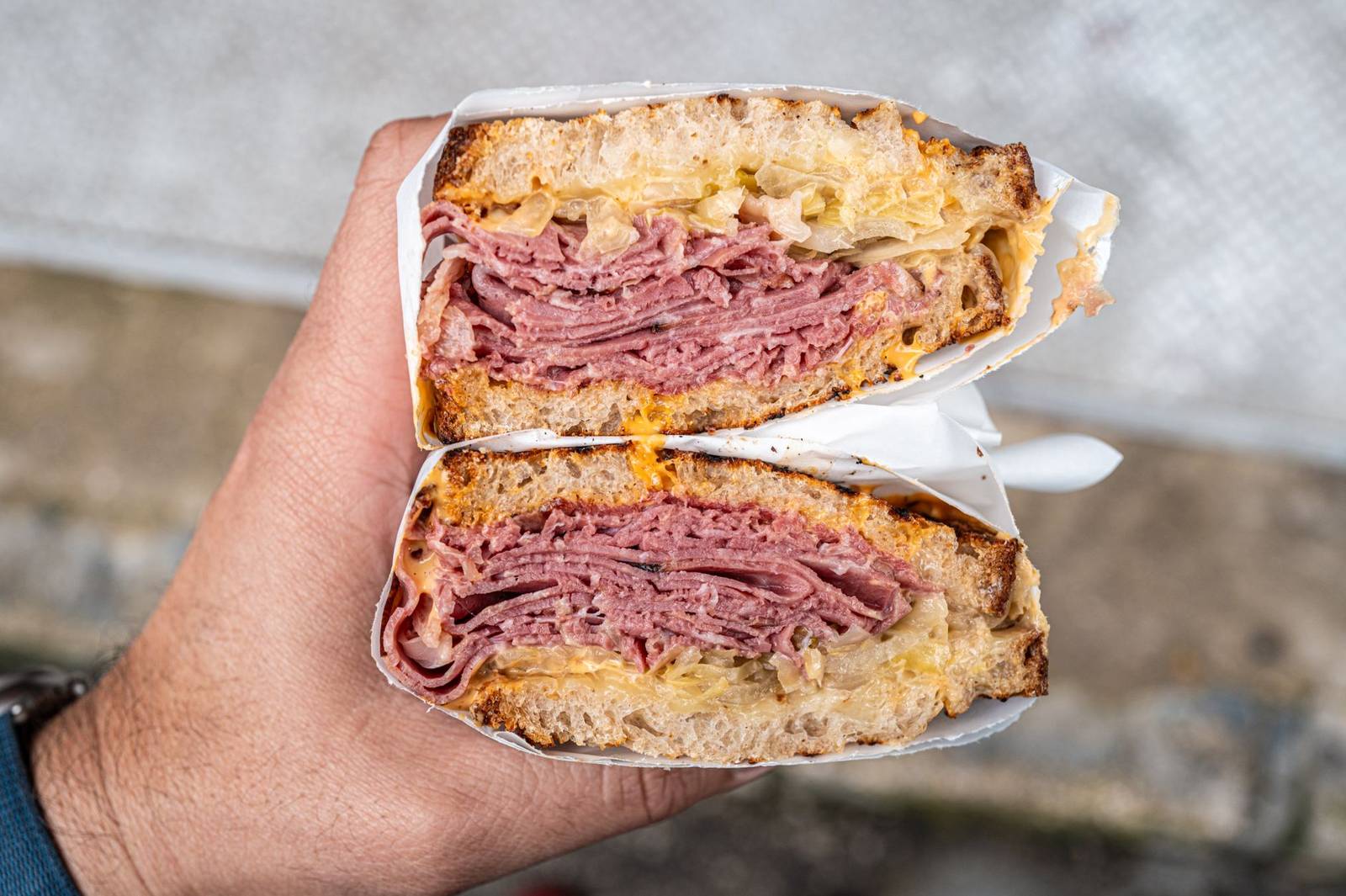
Pastrami and corned beef are close cousins but not the same thing:
- Corned beef is cured in brine and then boiled.
- Pastrami is cured, given another round of seasoning on the outside, and then smoked, which makes it more peppery.
- In New York, pastrami is usually the fatty navel cut, piled onto rye.
The Reuben takes corned beef and adds sauerkraut, Swiss cheese and Russian dressing. NYCtourism.com also warns that kosher delis do not skimp on portions, so bring a friend.
Street food: hot dogs, halal carts and the chopped cheese
The city’s street food grows out of the same immigration story as its delis. Devour Tours describes New York as a city of immigrants, with its famous dishes largely tied to immigration patterns.
- Hot dogs: the hot dog first appeared on New York’s streets in the 1860s, sold by German immigrants, per Devour Tours. The “dirty water dog” gets its nickname because the frankfurters linger in a tray of hot water until ordered.
- Halal cart chicken and rice: chopped chicken over rice with lettuce and tomato, finished with white sauce and red hot sauce. Table Journey says The Halal Guys began in 1990 as a hot dog cart before switching to chicken.
- Chopped cheese: ground beef, onion, tomato and melted cheese in a hero roll. Devour Tours says it possibly started at Hajji’s Deli, a bodega in East Harlem, though there is no consensus.
Sweet things: cheesecake, egg cream and the black and white cookie
New York cheesecake is dense and creamy, with extra egg yolk in the cream cheese, and it is traditionally served without toppings on a thin cookie or graham-cracker crust. NYCtourism.com traces the style to the invention of cream cheese in Chester, New York, in 1872.
NYCtourism.com also reports that Arnold Reuben asserted that he created the first modern New York cheesecake in 1929. The Village Voice adds that Junior’s was founded in 1950 in Downtown Brooklyn and quickly became a famous purveyor of the dessert.
The egg cream contains neither egg nor cream, only milk, seltzer and chocolate syrup, according to Table Journey. NYCtourism.com cites the Encyclopedia of New York City in placing its origin on the Lower East Side in the 1920s.
The black and white cookie is a flat cookie on a dense cake base, iced half vanilla and half chocolate. Table Journey traces it to Glaser’s Bake Shop in Yorkville, founded in 1902.
For something newer, Devour Tours credits Dominique Ansel with the cronut, a croissant and doughnut hybrid he introduced at his SoHo bakery in the spring of 2013.
Dishes that began in New York restaurants
Some famous dishes were invented or reshaped in the city’s kitchens, and the origin stories are often contested. Treat the dates below as the version each source gives.
- General Tso’s chicken: NYCtourism.com says Shun Lee Palace chef T.T. Wang made a sweetened version in 1972, while Peng Chang-kuei served his own in his NYC restaurant in 1973. Chef Denise notes the dish itself was invented in Taiwan.
- Eggs Benedict: Table Journey says the dish is claimed by Delmonico’s and by an 1894 story from the Waldorf Hotel.
- Lobster Newberg: the Village Voice says a ship’s captain, Ben Wenberg, brought the recipe to Delmonico’s in 1876. After a fight, the owner reversed the first three letters of the name.
- Fried chicken and waffles: the same source says it was invented in Harlem at Wells’ Restaurant in the 1940s.
- Manhattan clam chowder: a red, tomato-based soup with no milk or cream, which the Village Voice says was apparently first called Coney Island clam chowder. It names Randazzo’s in Sheepshead Bay and the Grand Central Oyster Bar as places to taste it.
How to eat your way through the list
You will not finish everything in one trip, so choose a few and eat them well. A little planning helps more than a long list.
- Order a plain slice first, so you can judge the crust, sauce and cheese before toppings get involved.
- Share deli sandwiches, since kosher delis do not skimp on portions.
- Eat bagels fresh and untoasted if you want to follow the traditionalists.
- Group your stops by area so you are not crossing the city between bites.
To decide where to base your meals, read our guide to the best food neighborhoods in nyc. For a caffeine break between bites, see the best coffee shops in nyc.
Venues named here are neutral examples from the cited sources, not endorsements, and opening hours and menus change.
Frequently asked questions
What is the most classic New York food?
Show answer
There is no official answer. The pizza slice, the bagel with cream cheese and lox, and pastrami on rye all appear on Devour Tours’ list, so those three make a sound starting point.
Is General Tso’s chicken really from New York?
Show answer
Partly. Chef Denise says the dish was invented in Taiwan and then transformed and popularized in NYC in the 1970s, as chefs sweetened it for American tastes.
Was Lombardi’s the first pizzeria in America?
Show answer
It is often called that, but the claim is disputed. Table Journey says Lombardi’s is said to have been licensed to sell pizza in 1905, and that later research has challenged the claim.
Why do so many famous New York foods come from immigrant communities?
Show answer
Because the city was built by newcomers. Devour Tours notes that New York is a city of immigrants and that its signature dishes largely follow immigration patterns.